Apple Compote
Desserts
 October 11, 2026
Apple Compote
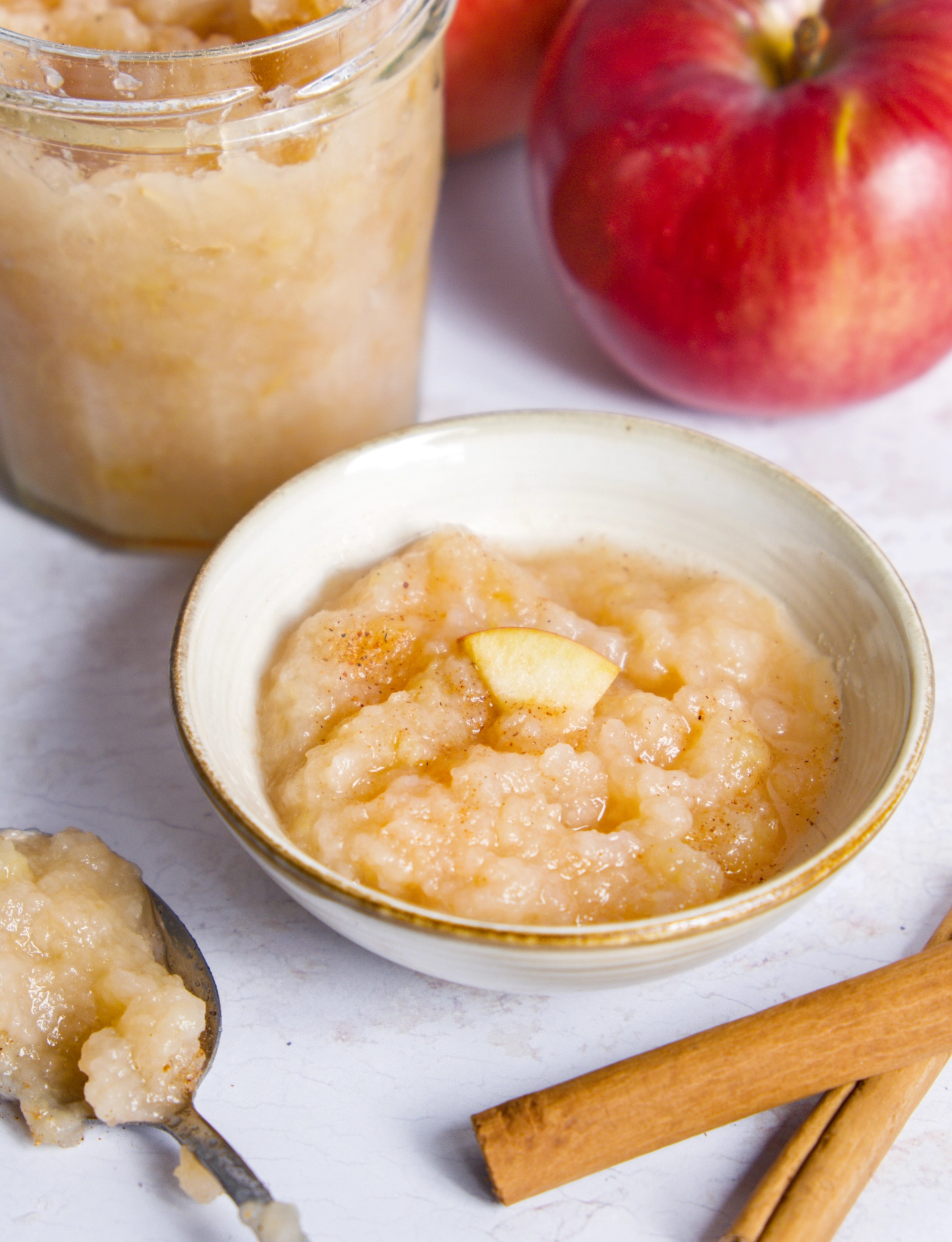
Soft apples simmered slowly until they collapse into a thick, glossy compote. Sweet, faintly caramelised, and comforting. The French compote eaten warm, cold, or straight from the jar!
October 11, 2026
Disclosure: This post may contain affiliate links which provide us a small commission when used for purchase. Please read my disclosure policy for more information. I am grateful for your support!
This apple compote started with our tree at the bottom of the garden, which decided this October to drop it’s most beautiful apples. In France, when you have many apples, you always make some compote. My neighbour keeps rows of jars of it in their cellar. It’s also the best thing to do with the ugly apples, because you can simply cut away the bruises and nobody will ever know.
Apple compote is usually sweetened a little, often scented with vanilla or cinnamon, and left slightly chunky. Children eat it at “goûter” after school. Adults (me included) eat it standing at the fridge door. I also often eat it with porridge, yogurt, a slice of brioche, or as the base of an apple tart.
Another great idea is warm apple compote on pancakes for a proper Sunday morning treat, on thick pancakes or thin French crêpes. Add a spoonful of crème fraîche and you got yourself some indulgent autumn breakfast!
Table of Contents
Where apple compote comes from
First of all, let’s clear up what is what. My husband is English, and he calls this applesauce. Applesauce and apple compote are very similar: both are apples cooked down until soft. The difference is mostly in how they’re made and what you do with them.
Homemade applesauce is usually made with sharp Bramleys, barely sweetened and cooked until smooth, then served next to roast pork. My French apple compote is a dessert. That’s how I grew up eating it, so pairing it with meat still feels very strange to me!
The word itself is older than you’d expect. In 13th-century Old French, composte simply meant “a mixture”, from the Latin compositus, “put together”.
And here’s the slightly awkward bit: compote and compost are the same word. They came from the same French root and only went their separate ways later, one towards the dessert table, the other towards the bottom of the garden. (Where, come to that, the bruised bits of my apples ended up.)
And to make it even more complicated, the English borrowed the word compote in the 1690s, which meant fruit preserved in syrup. Before fridges, cooking fruit with sugar was how you made a harvest last beyond a few weeks. Today it’s everywhere in France, from school canteens to the little squeeze pouches in every lunchbox. The homemade version is still the one people remember though, it’s healthier, tastier and makes your kitchen smells lovely!
Ingredients
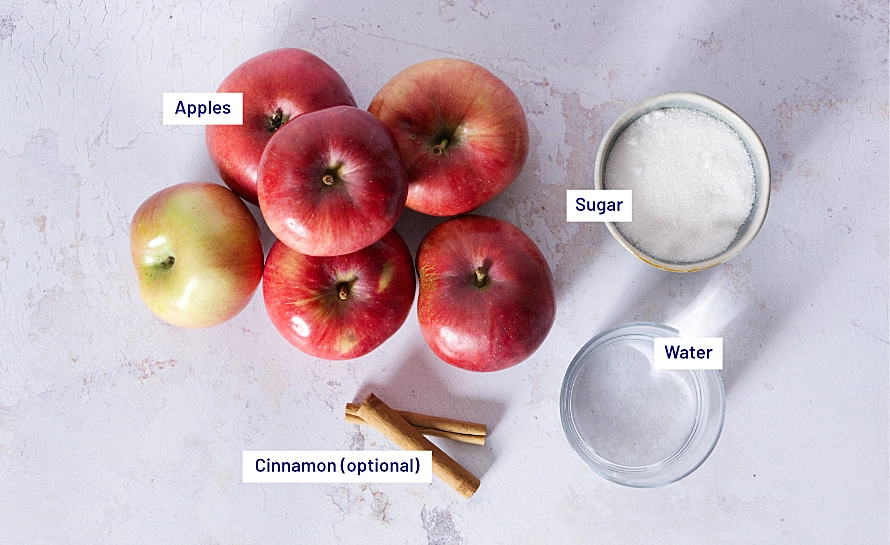
- Apples — about 1 kg, or 6 to 7 medium ones. For a soft compote, choose apples that fall apart when cooked. In France that means Reine des Reinettes, Boskoop, Canada Grise or Golden. In the UK, Bramleys collapse beautifully but need a little more sugar. Firm apples like Granny Smith hold their shape, so you’ll get chunks. Garden apples of unknown variety work too. Mixing varieties gives alternative flavours.
- Caster sugar — just enough to round things off. Apples vary hugely, even from the same tree, so start with a little and taste at the end.
- Water — only a few spoonfuls, so the apples don’t catch before they release their own juice.
- Butter — optional, a small knob stirred in at the end. Not strictly traditional, but it gives a rounder, silkier finish.
- Ground cinnamon — a light dusting on top when you serve. It’s optional, but apple and cinnamon are old friends.
How to make apple compote
1. Cut the apples roughly
Peel and core the apples, then cut them into chunks. They don’t need to be neat, because they’ll fall apart anyway. Just keep them roughly the same size so they cook evenly.
2. Cook low, with the lid on
Everything goes into a heavy-based pan over a low heat. Low is the important word. You’re not frying the apples, you’re letting them soften gently in their own steam. They’re ready for the next step when the chunks start to collapse as you poke them with a wooden spoon.
3. Reduce
Take the lid off and let some of the liquid cook away, stirring often so nothing sticks. Stop when the compote is thick enough to sit on a spoon.
4. Taste, then mash or blend
Taste and add a little more sugar if it needs it. Then mash for a rustic compote, or blend it if you want something closer to a smooth apple purée. A light dusting of cinnamon on top, and it’s ready.
Tools for this recipe
Check out my favorite kitchen essentials and cookware!
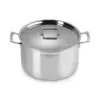
- Use a heavy-based saucepan or cocotte with a lid, so the apples soften evenly without catching on the bottom.
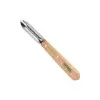
- Use a good vegetable peeler, so peeling a kilo of apples doesn’t take all afternoon.
- Use a wooden spatula to stir, so you don’t scratch the pan and can feel when the apples are giving way.
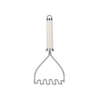
- Use a potato masher for a rustic texture, or a stick blender for a smooth compote.
Tips for success
- Cook it low and slow: high heat catches the bottom before the top has softened.
- Don’t drown it: too much water gives a runny compote that takes ages to reduce. Juicy apples need almost none.
- Sweeten at the end: start with less sugar and add more once you’ve tasted it.
- Keep the bruised apples: windfalls are ideal for compote. Cut away the damaged bits and use the rest.
- Cinnamon at the end: dust it on top when serving, rather than cooking it in. You keep the pale colour of the compote and the cinnamon smells fresher.
How to store it
- In the fridge: keeps for up to 5 days in a clean, airtight jar. Let it cool completely first.
- In the freezer: freezes well for about 3 months. Freeze it in small portions so you only thaw what you need. Thaw overnight in the fridge and give it a good stir, as it can look a little watery at first.
More fruity dessert recipes to try
Variations
- Spiced apple compote: add a cinnamon stick and a star anise to the pan while the apples cook, or a pinch of ground cloves. Brilliant in autumn.
- Apple and pear: replace a third of the apples with ripe pears for a softer, sweeter compote.
- Apple and blackberry: add a handful of blackberries for the last five minutes. It turns a lovely deep pink.
- No added sugar: use naturally sweet apples like Golden or Gala and leave the sugar out. A squeeze of lemon keeps it bright.
- Salted butter caramel: cook the sugar to a light caramel first, add a knob of salted butter, then the apples. Very Breton!
- With vanilla: split a vanilla pod, scrape out the seeds and add both seeds and pod to the pan with the apples. Remove the pod before mashing. This is how many French families make it, and it’s lovely.
FAQ
Is apple compote the same as applesauce?
They’re very similar. Both are apples cooked until soft. French apple compote is usually sweetened, flavoured with vanilla and left a little chunky, and eaten as a dessert. British applesauce tends to be sharper, smoother and served with roast pork.
Can I use apple compote instead of applesauce in baking?
Yes. Use the same amount. If your compote is sweetened, you might want to reduce the sugar in the recipe slightly. Blend it first if the recipe calls for smooth applesauce.
What are the best apples for compote?
Apples that break down when cooked: Reine des Reinettes, Boskoop, Canada Grise, Golden or Bramley. Mixing varieties gives the best flavour. Avoid very firm apples if you want a smooth result.
Can you make apple compote without sugar?
Yes. Use naturally sweet apples like Golden or Gala and leave the sugar out. A pinch of cinnamon or a vanilla pod helps it taste sweeter.
How long does homemade apple compote last?
Up to 5 days in an airtight jar in the fridge, or around 3 months in the freezer.
Can you freeze apple compote?
Yes, it freezes very well. Freeze it in small portions so you can thaw only what you need.


 Prep Time 15 minutes
  Cook Time 20 minutes
  Total Time 35 minutes
  Servings 6
Description
Soft apples simmered slowly until they collapse into a thick, glossy compote. Sweet, faintly caramelised, and comforting. The French compote eaten warm, cold, or straight from the jar!
Ingredients
- 1 kg apples about 6 to 7 medium
- 50 gr caster sugar plus extra to taste
- 4 tbsp water
- 10 gr butter optional
- 1 pinch cinnamon optional
Equipment


Instructions
1. Prepare the apples
- Peel, quarter and core the apples, cutting away any bruised bits. Cut each quarter into 2 or 3 chunks.
2. Combine
- Put the apples, sugar, water, vanilla seeds and pod into a heavy-based saucepan. Stir to combine.
3. Cook covered
- Cover and cook over a low heat for about 15 minutes, stirring now and then, until the apples are soft and starting to collapse.
4. Reduce
- Remove the lid and cook for another 5 minutes, stirring often, until the compote thickens and most of the liquid has evaporated.
5. Finish and taste
- Take the pan off the heat. Taste, and add a little more sugar if needed. Stir in the butter, if using.
6. Mash or blend
- Mash with a potato masher for a rustic compote, or blend with a stick blender for a smooth purée.
7. Serve
- Serve warm with a light dusting of cinnamon, or leave to cool completely before transferring to an airtight jar.
Notes
- Apples: soft-cooking apples give a smooth compote, and firm apples give chunks. Mixing varieties gives the best flavour.
- Sugar: taste before adding more. Bramleys need more sugar, while Golden apples might need almost none.
- Too runny? Cook uncovered for a few more minutes, stirring constantly.
- Storage: up to 5 days in an airtight jar in the fridge, or 3 months in the freezer.
- Vanilla pod: rinse and dry it after cooking, then pop it into your sugar jar to make vanilla sugar.
- Vanilla version: add the seeds and pod of 1 vanilla pod with the apples in step 2, and remove the pod before mashing.
Share your feedback and spread the love!
If you try this recipe, I’d love to hear how it turns out! Leave a ★★★★★ rating and your thoughts in the comments, it helps fellow French foodies discover this recipe too. Snap a photo and tag @obviously.french on Instagram. Come talk about it in our Facebook group. And don’t forget to save this recipe to Pinterest so you’ll always have it handy for your next French-inspired meal!